Industryexample use case
AI visual quality inspection in manufacturing
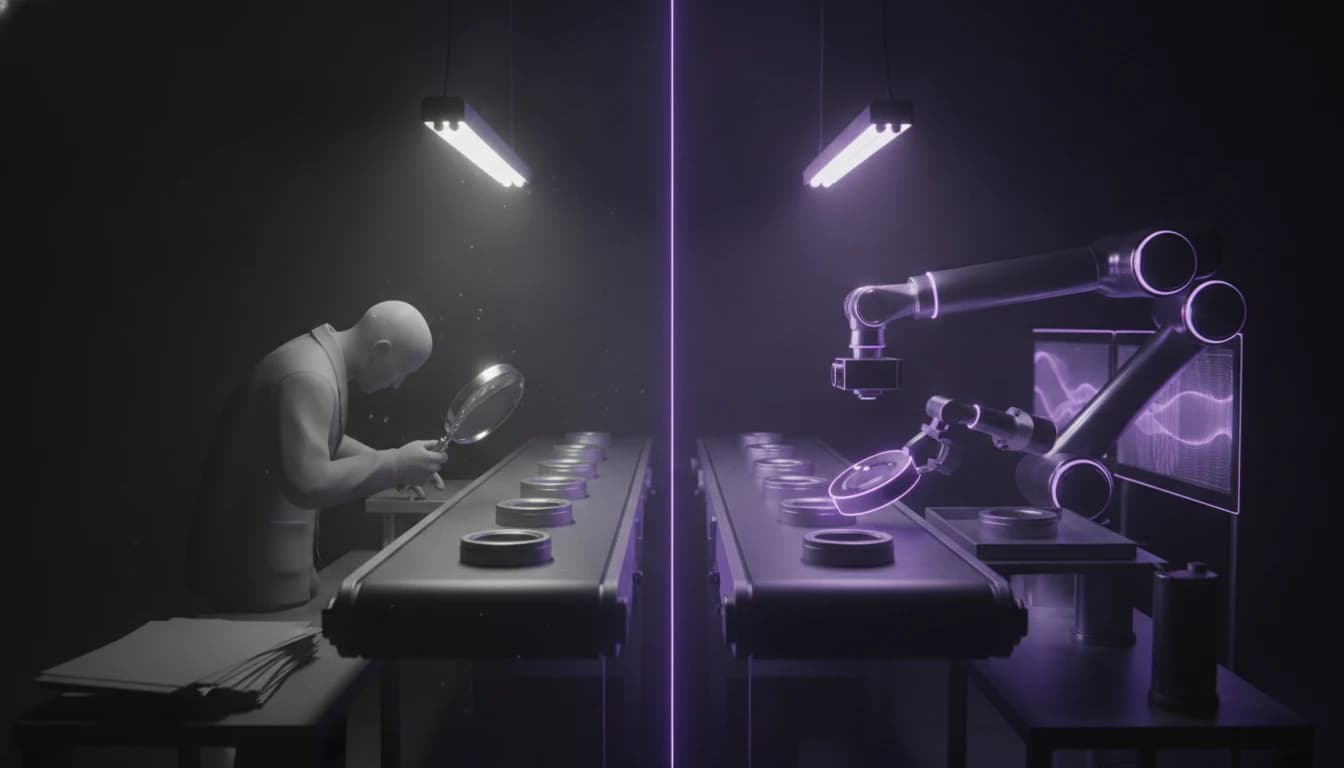
Quality inspection depends on the shift, fatigue and lighting. Defective parts are sometimes caught only by the customer. A computer vision model trained on your own images inspects every part the same way — at night and on weekends — and runs right there on the shop floor.
Sound familiar?
- Visual inspection is subjective: what one shift passes, another rejects.
- At high line speed you cannot inspect every part, only a sample.
- Customer complaints cost more than the defective part itself — and damage trust.
- The off-the-shelf solution from the camera vendor does not fit your specific defects.
How it works
1. Image capture and annotation
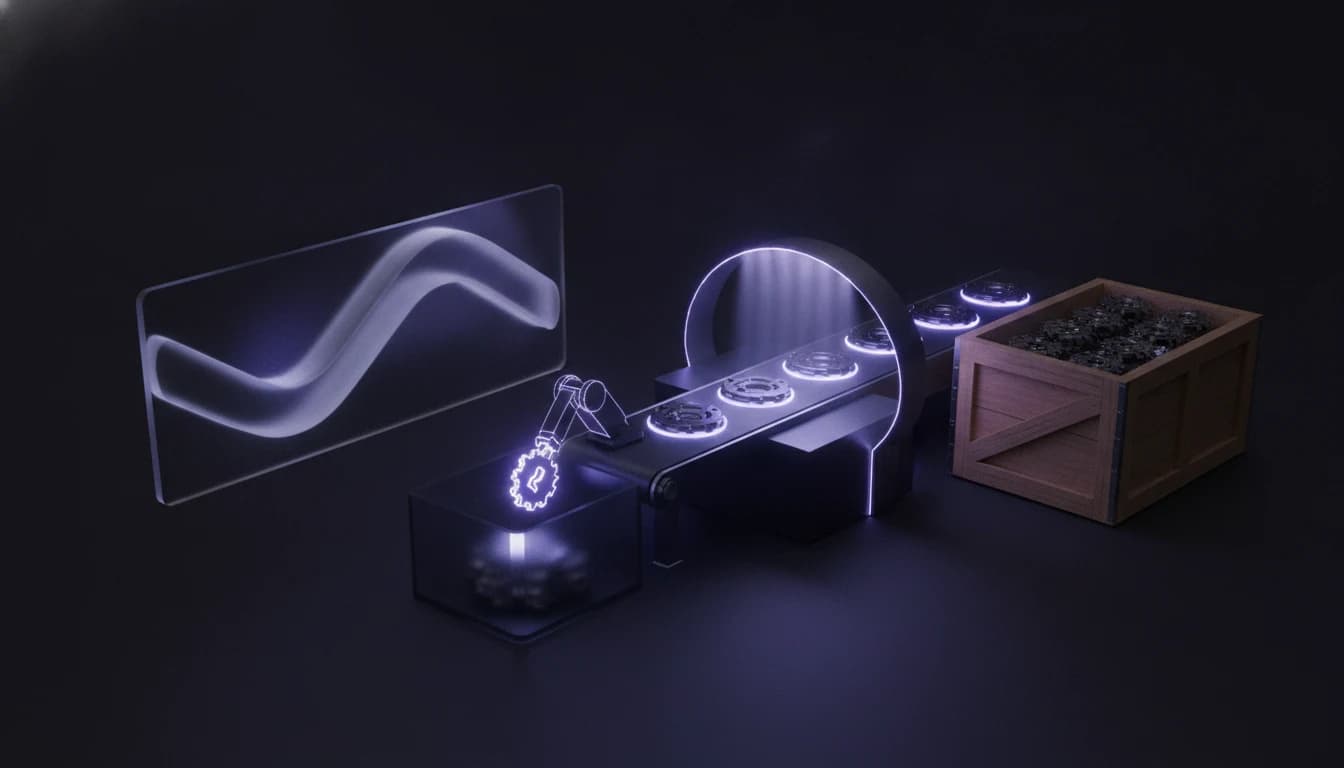
We photograph your parts on the line under real lighting. Together with your inspectors we label the defects — their know-how becomes the training data.
2. Training on your data
The model learns your parts and your defect types: scratches, cracks, missing components, colour deviations. Not generic objects.
3. Measured against your inspectors
On a held-out set we compare how many defects the model catches and how many good parts it wrongly rejects. The deployment decision is made on numbers.
4. Edge deployment and monitoring
The model runs on an industrial PC at the line, no cloud. We monitor drift — when the material or lighting changes, we know before quality drops.
What the system handles
- Surface defects: scratches, cracks, bubbles, stains, colour deviations.
- Assembly defects: missing or misplaced components, wrong orientation.
- Dimensions and shape when inspecting with a calibrated camera.
- Integration with PLC and MES — reject signal, defect statistics by shift and batch.
- Works with existing cameras where image quality allows; otherwise we design the imaging and lighting.
Human oversight and safety
- The model does not control the line on its own: rejects go through your PLC under rules you set.
- Uncertain parts go to manual inspection — you set the threshold based on what costs more: a false reject or a missed defect.
- Every decision is stored with its image; a complaint can be traced to the specific part.
- Imagery never leaves the plant. Both training and inference can run fully on-premise.
What result is realistic
on-prem
data never leaves the plant
For repetitive production with clearly defined defects we plan to catch most of the defects that slip through today, at a low false-reject rate — exact numbers come from a pilot on your images. The biggest effect is stability: every part gets the same inspection regardless of the shift.
The figures are indicative for typical volumes. We give a precise estimate for your company after analysing the process.
Indicative scope
- Feasibility study on a sample of images
- €1,500 – €3,000
- Data capture, annotation and model training
- from €12,000
- Edge deployment and line integration
- by number of stations
- Drift monitoring and retraining
- from €450 / month
Prices are indicative and exclude VAT. We give an exact figure only after analysing your process — not off the cuff on the first call.
Frequently asked questions
How many defect images do you need?
Fewer than expected: on the order of dozens to low hundreds of examples per defect type, if well labelled. Rare defects are handled with augmentation and anomaly detection. The feasibility study gives the exact answer.
Will it replace our inspectors?
No, it changes their work. The model handles the monotonous inspection of every part; people handle uncertain cases, new defect types and oversight. Their experience is also what we train the model on.
What if the material or a component supplier changes?
The model learned your parts, so the change will show. That is exactly why we monitor drift and have a retraining process ready — without it, quality would degrade silently.
Does the imagery have to go to the cloud?
No. Both training and inference run on your premises. This is one of the main reasons we build custom models instead of using cloud APIs.
Related service
Custom AI models
We build this solution as part of our service „Custom AI models“.
Fine-tuning, small specialised models and computer visionRead more
- Fine-tuning or a better prompt? When a custom model genuinely pays offA custom model sounds good in a meeting and bad on an invoice. Four situations where it pays off — and a decision process that can save you tens of thousands of euros.
- How much does an AI solution cost — and where budgets get burnedReal price ranges for an audit, a pilot and a production rollout, monthly running costs, and five places where companies most often spend money for nothing.
More solutions
 Wholesale
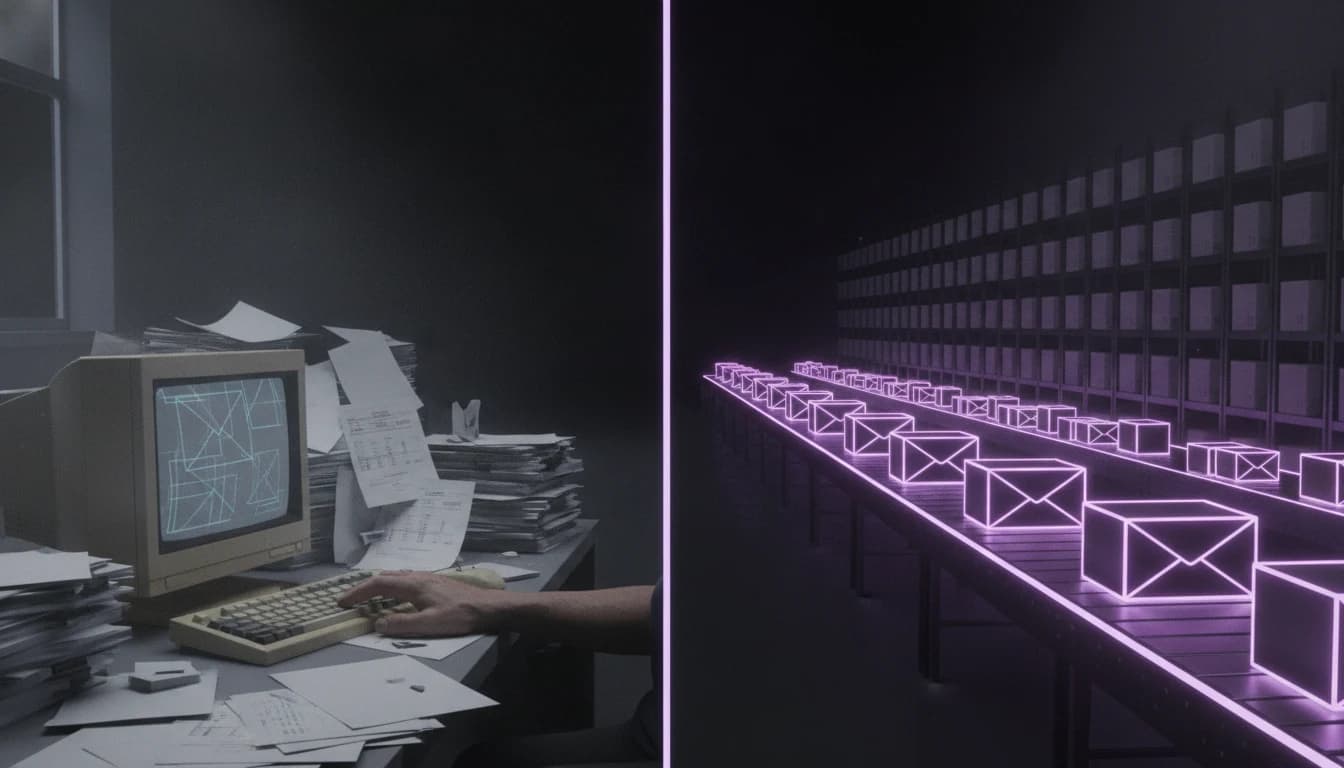
Automating email orders into your ERP with AI
~70% · of orders handled without a human Manufacturing
Company document search — an answer with its source in seconds
2–4 h · saved per person per week Accounting
Automated invoice and delivery note processing with AI
< 3 months · typical payback periodIf you can name the defect type that costs you the most complaints, we can tell you within a few weeks, on a sample of images, whether the model will catch it.
You do not need to know whether you need AI, automation or a new system. Show us the process that slows you down — we will tell you what can be automated and whether it pays off.