
Accountingexample use case
Automated invoice and delivery note processing with AI
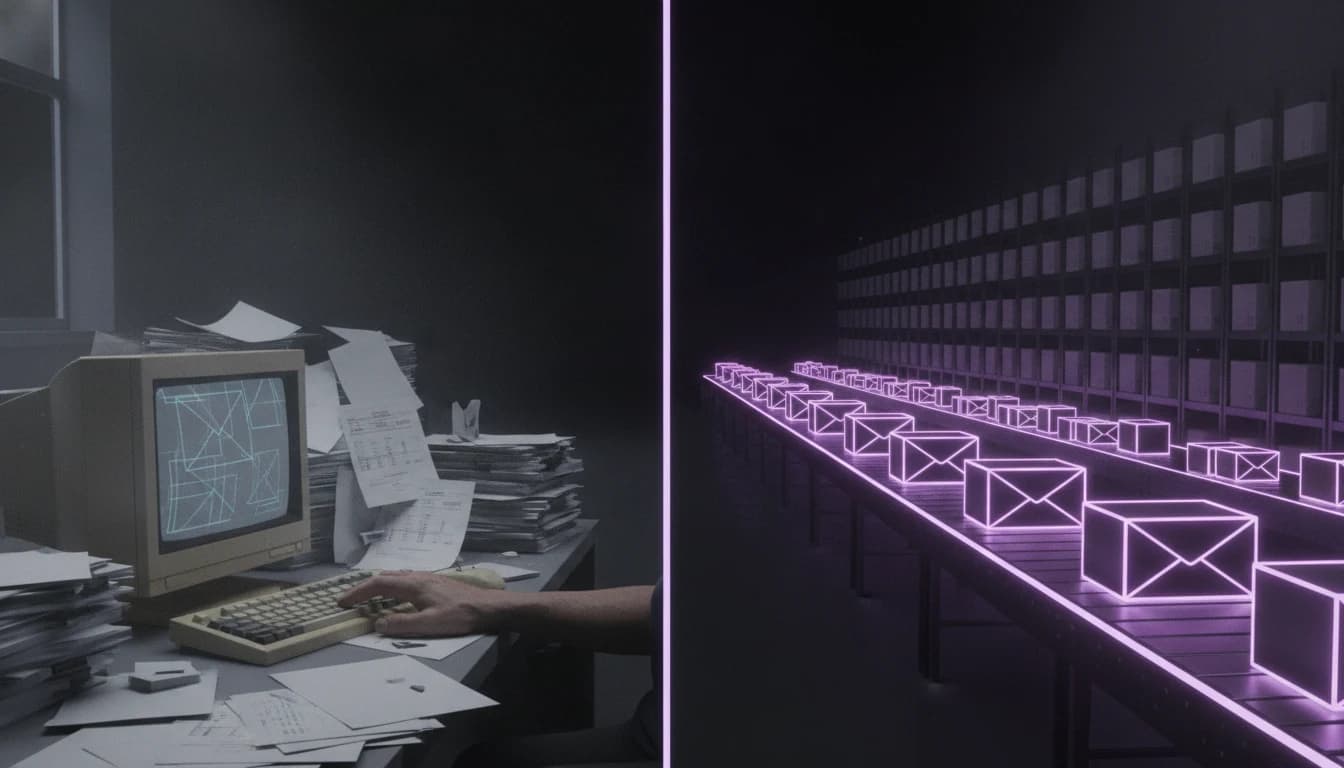
Incoming documents arrive as PDFs, scans and phone photos. The accountant retypes them and the errors are found at month-end close. AI extracts the data, checks the totals and posts the document to the system — and sends anything it is unsure about to a person for review.

Sound familiar?
- Dozens to hundreds of incoming invoices a month are retyped by hand into accounting or the ERP.
- Delivery notes are matched to orders manually and mismatches surface only in a complaint.
- Classic OCR handles standard templates but fails on new suppliers, handwritten notes and photos.
- Accounting spends month-end hunting typos instead of reviewing.
How it works

1. Documents come in from anywhere
A mailbox, a shared folder, a scan or a phone photo. The document enters processing automatically.
2. Extraction by meaning, not template
Supplier, company ID, payment reference, line items, VAT rates, totals, dates. Read by meaning rather than position — so it works on a document from a brand-new supplier.
3. Sum checks and matching
Verifies that the lines add up, VAT is consistent and the document matches an order or delivery note. Mismatches are flagged.
4. Posted to the system — or sent for review
High-confidence documents go straight to accounting or the ERP. Low-confidence ones enter a manual review queue — never silently into the books.
What the system handles
- PDF (text and scanned), images, phone photos, multi-page documents.
- Invoices, delivery notes, credit notes, proforma invoices, receipts.
- Slovak, Czech and foreign documents, including foreign currencies and date formats.
- Posting to Pohoda, Money, Omega, SAP, Helios or a custom system — via API or import.
- Three-way matching: purchase order – delivery note – invoice.
Human oversight and safety
- You set the confidence threshold: for example, anything above €10,000 is always reviewed by a person.
- The reviewer sees the document and the extracted data side by side, corrects with one click — and the correction improves the system.
- Every posting has a trail: which document, which page and with what confidence it was created.
- Nothing is sent for payment automatically. Payment approval stays with people.
What result is realistic
< 3 months
typical payback period
At hundreds of documents a month we plan for 70–85% processed without intervention and a large time saving on the rest — review takes seconds, not minutes. Production rollout typically pays back in under three months at hundreds of documents a month; at dozens, within about a year.
The figures are indicative for typical volumes. We give a precise estimate for your company after analysing the process.
Indicative scope
- Document and process analysis
- €900 – €1,800
- Pilot on your real documents (2–4 weeks)
- €3,500 – €6,000
- Production rollout with accounting integration
- €6,000 – €12,000
- Operations and monitoring
- from €290 / month
Prices are indicative and exclude VAT. We give an exact figure only after analysing your process — not off the cuff on the first call.
Frequently asked questions
How is this different from the OCR we already have?
OCR reads characters. It does not know that “Total due” is the grand total, or that a line on page two belongs to page one. AI reads the document the way a person does — by meaning — so it handles new templates without configuration. OCR stays as a fallback for poor scans.
What happens to documents the system is unsure about?
They enter a review queue with a note on what exactly is uncertain. The reviewer corrects and confirms. We track the share of such documents — if it grows, something changed and we address it.
Can it handle handwritten documents?
Partly. Printed documents with a handwritten note, yes; a fully handwritten document is borderline — and the system admits that and hands it to a person.
Our accounting runs in Pohoda, Money or Omega. Can it connect?
Yes. Most Slovak systems have an API or an import format. If not, we solve it with file export and import — less elegant, but it works.
Is it compliant with GDPR and accounting law?
Documents are processed in the EU, nothing is used to train models, and the original stays in your system. Archiving and accounting responsibility remain where they were — with you and your accounting firm.
Related service
AI agents & automation
We build this solution as part of our service „AI agents & process automation“.
An agent that processes emails, orders and invoices instead of your teamRead more
- How to get data from PDFs into your system without retyping: OCR, templates or AI?How to get data from PDFs, scans and spreadsheets into your system without retyping: OCR, templates or AI, which documents are hard and how to measure accuracy.
- Automated invoice processing: OCR, RPA or AI? What to choose and whyThree technologies that get mixed up when companies talk about extracting data from invoices and delivery notes. What each one actually does, where it breaks, what a process that keeps errors out of the books looks like, and what it costs.
- How much does an AI solution cost — and where budgets get burnedReal price ranges for an audit, a pilot and a production rollout, monthly running costs, and five places where companies most often spend money for nothing.
- From PoC to production: why most AI projects never shipAI projects do not die because the model fails. They die in the space between “it looked good in the demo” and “it runs reliably and we know what it costs”.
More solutions
 Wholesale
Automating email orders into your ERP with AI
~70% · of orders handled without a human E-commerce
AI customer support automation — without the risk of AI sending nonsense
~40% · shorter first-response time Distribution
Email automation: a shared inbox that sorts itself
~80% · of emails sorted and routed without a humanCount how many documents a month someone retypes. If it is more than a few dozen, it is worth a conversation.
You do not need to know whether you need AI, automation or a new system. Show us the process that slows you down — we will tell you what can be automated and whether it pays off.